on
LF03: Cedric Goetgebuer (EN)
I.
Through his involvement in the influential Belgian bands Rise and Fall, Partisan, Raw Peace, and Blind to Faith, Cedric Goetgebuer has actively shaped European hardcore’s evolution over the past three decades. His most recent project, Wrong Man, channels the same energy into something rockier and more primal. With their debut album set for release in September 2026 through Deathwish, it felt like a good time to sit down for a conversation.
We talked about running first, then let the conversation drift through West Flanders in the late nineties, the sound of Rise and Fall, how a song actually gets written, and what, if anything, carries over to whoever is coming up next.
II.
LF: Since you and I share this running connection, let’s start there. You strike me as an early riser with your regular runs around six most mornings. I’m honestly envious of that discipline. How has your relationship with running developed?
CG: [Laughs] I built the routine first, then fell in love with it and then intensified it. That is probably the honest order of things. But to get to the core of it: I don’t really know what to call it except that it’s something that I needed in my life. It makes me feel more alive and I enjoy life more because of it. There was some kind of imbalance and running brought that balance back. I’ve never been much of a sports guy, though I’ve always been active. Only recently did I get properly into running and it’s liberating to get better at it, to push the distance, and to have it just click. There’s a real mental side to it that carries into the rest of the day. It has sparked new connections and brought back old ones, too. It’s an incredible way to explore a city and nature. There’s even something almost punk about it, if I’m honest. It has a feeling of freedom to it.
LF: I’ve thought about this a lot recently, and for me it comes back to exactly what you just said—that feeling of being alive. That’s what playing music does for me.
CG: I hadn’t made that connection until now, but it makes total sense. Maybe it’s even more primal with running because your heart rate goes almost to the max and you physically feel it, but it’s the same with playing live. You lose all your boundaries, you lose yourself in it. That’s the perfect analogy, actually. It puts you in a place close to flow or zen. When it’s really working, the crowd is moving and the music is basically playing itself. It’s the same when running feels right: your body just does it and you’re along for the ride.
LF: Now that you’ve got two things that make you feel that alive, do you find yourself looking for a third?
CG: I’m honestly not sure I’m searching for another one. I’m more interested in keeping things balanced—knowing what the key ingredients of a good life are and making sure I have enough of each. Reading falls into that category for me, but it’s something I do too little of. It’s nourishing though and very different from playing live or running. Even within music, performing is a different experience from the creative side of it. So there are a lot of separate pieces. I’m fine with running and playing live being the two big ones for now. Maybe I’ll just have to run a bit less.
LF: There’s always another record to write, or another marathon to run.
CG: Exactly. But running is more accessible, that’s the thing. Even a marathon: you train, but essentially you just show up. Releasing a record is a completely different animal. It’s intense, it takes so much more out of you than writing the songs, once the whole studio process gets added on. I’m actually relieved to have two records [Raw Peace and Wrong Man] behind us now. So the question for me right now is: what’s next musically? I like being at the point where I genuinely don’t know. At some point I’ll need to write something new, or start a new project. We’ll see.
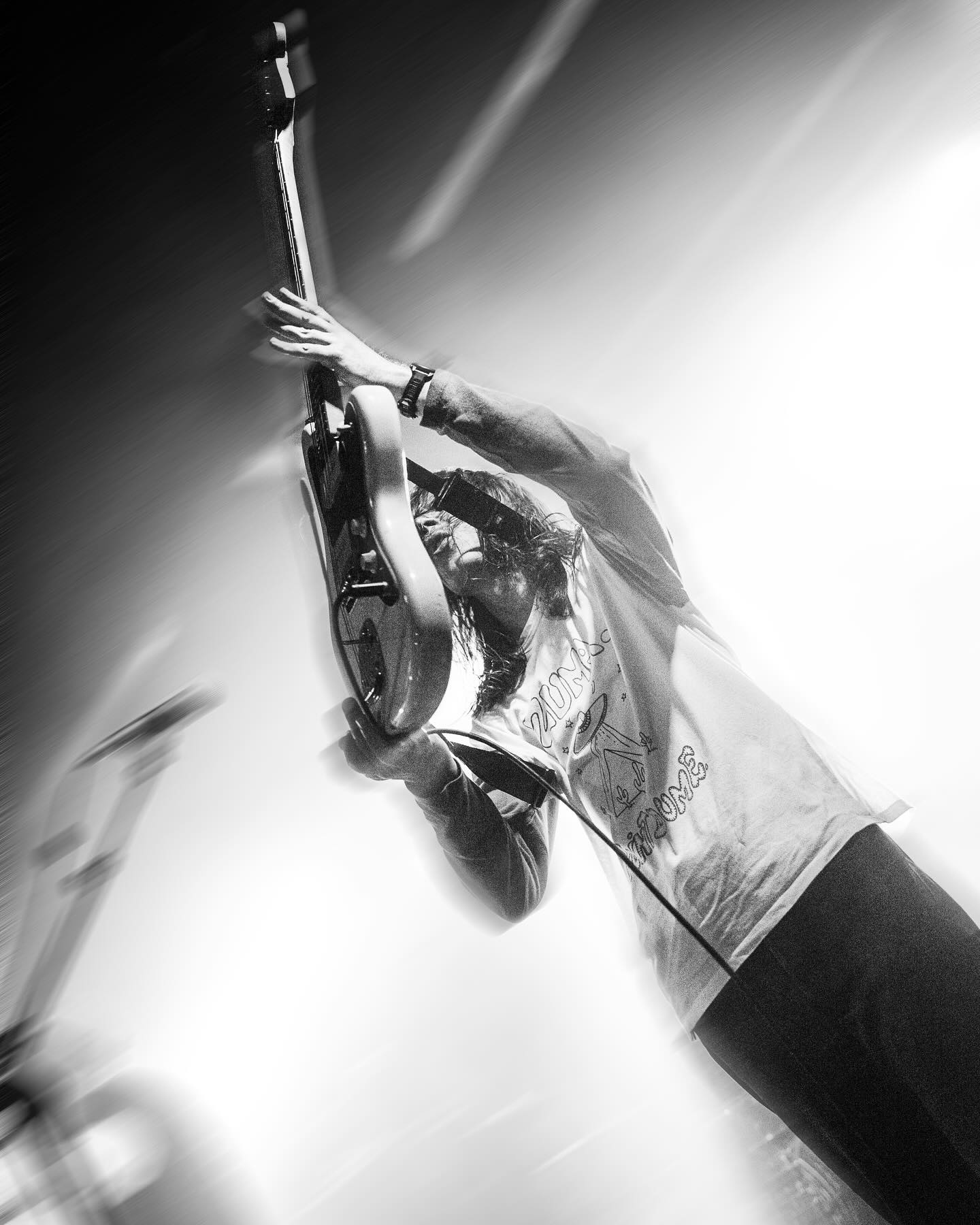 Cedric Goetgebuer live with Wrong Man. Kavka Outdaan, Antwerp. June 9, 2025. Photo by Şilan Dağdeviren.
III.
LF: That’s a good bridge into the next part. The premise I built the first Leitmotif piece on was that a lot of the original impulses in punk and hardcore came from the US, but that the European scene developed its own distinct and self-sustaining logic. Did you ever realize you weren’t just participating in something handed to you, but that without people like you, the infrastructure wouldn’t hold?
CG: That’s an interesting framing, because my own experience was a bit different. When I got into hardcore, it was never just a subculture to me. It was a counterculture, a genuinely alternative world. This was the mid-to-late nineties. I was fifteen in ‘98, coming out of West Flanders in Belgium, right after the whole H8000 peak. Bands like Liar and Congress were the big names at the time. To me they weren’t local bands, even though they were. It already felt like a European thing and it was already very DIY. The first shows in my hometown were organized by guys just a couple of years older than me, from my own school. It became obvious very quickly that the people running things were just regular people and that everyone had a role to play. I was introverted, so I gravitated towards guitar. I decided early that this would be my thing. By fourteen or fifteen, a couple of friends and I had started our first bands, and we were the young ones trying to find our place in a scene that already existed. So it was clear from the start that this was something built from the ground up. It was only a couple of years later, once that first wave died down, that I started looking at American bands, thinking, that’s where the real thing is happening.
LF: It sounds like there was already a fairly elaborate infrastructure in place by the time you got into the scene. I suppose this depends heavily on where and when you enter, though.
CG: Definitely, and I think my entry point was pretty atypical for Europe. There was a kind of bubble, and it eventually burst. People in my class were ordering records from Good Life just because it had become a bit of a trend, not because they were really into it. I could already see through that and it’s part of what convinced me this wasn’t just a phase for me.
LF: That’s part of the beauty of it, though. Once there’s enough momentum in one place, it becomes something people assume was always there, and will always be there. It sustains itself.
CG: That’s true, but looking back now, almost thirty years later, a lot has changed and a lot has stayed the same. It’s not exclusively a youth thing anymore. Back then everyone was so young, and because information was harder to come by, everything felt more boxed in. There was a kind of purity in that, but it was mostly young people searching for identity. Now hardcore is intergenerational and more eclectic—which isn’t necessarily a bad thing.
LF: Would you say that made it purer and more instinctive back then, compared to the scene’s quality now?
CG: I don’t want to glorify the old days. There’s nostalgia, sure, and something closer to its origin will by definition feel more pure. But in a lot of ways hardcore is better now than it’s ever been. It is more accessible and more varied. We took ourselves too seriously back then. It’s more rationalized now, though we’re also just older. That identity-search aspect can become limiting too and I felt that myself. You find hardcore, it becomes this pivotal moment, and then the scene becomes your whole world, your micro-cosmos. Eventually you either come full circle or you have to break away from it a bit.
LF: Compared to ten or fifteen years ago, it feels like bands today can exist within the scene and be freer in how they express themselves. There is room for more variants to coexist, and it’s celebrated rather than just tolerated.
CG: Yeah, and I think in that sense it might genuinely be better than ever, because people are more accepting of that range. All these facets now exist under one umbrella. Coming up, you don’t always realize it’s all coming from the same spark, but eventually you feel it. We used to be very tribal about sub-genres, and now those things just coexist. Turnstile is the obvious example: look at who likes them—it’s everyone, inside hardcore and far outside it. There’s a real respect now for authenticity, an acknowledgment that a band being fully itself is a good thing, regardless of whether the style is exactly your thing.
IV.
LF: I want to dive into the Belgian scene for a moment, and Rise and Fall specifically. When I was getting into the scene, Rise and Fall felt on par with, or even surpassing, a lot of American bands. It was surprising to find out that the band was from a small city in Belgium.
CG: I mentioned the H8000 scene earlier. Once that faded, a few years later Rise and Fall started alongside Dead Stop, Justice, and Restless Youth. It became obvious those bands were better than a lot of the American bands touring at the time. There was an oversupply of US bands back then, honestly. A band would release a demo and somehow get flown out to tour all of Europe, fully arranged, which sometimes felt absurd. Everyone was excited for the local bands, and American bands increasingly had to open for them, which just made sense given the quality gap.
The real turning point for us was that certain American bands became genuine peers rather than just bands we opened for on a tour. Justice had Mental and Righteous Jams, Dead Stop had 86 Mentality, we had Blacklisted, who we toured Europe with. Those relationships were between equals, like just another band from another city. That helped enormously. Because of it, Justice, Dead Stop, and Rise and Fall got the chance to tour the US and sign to American labels, and that shifted the perception back home—suddenly people took us a lot more seriously.
On our end, I think we found our own voice, which was maybe a bit unusual for the time. We came from a more traditional hardcore base, but tuned low, played loud, and drew from metal in a way that wasn’t quite what the metalcore bands were doing.
LF: That really drives home how important a functioning local scene is, to have bands push each other. You see a peer write a great song and think, we can do that too.
CG: Exactly, and it was all happening at once. Justice was maybe the first of us to go to the US, and when you’re close to a band it doesn’t feel that crazy, you just go. We always downplayed touring the States a bit, because we didn’t want it to look like some huge thing—sometimes you’re just playing to an empty VFW hall. Times were different too, though. There were a lot more local shows, because everyone in that scene was young and living for it. We didn’t have much else going on. We didn’t run at six in the morning back then [laughs]. Every weekend there was a show somewhere, we’d drive three hours for it. Belgium had a lot more of those small, local youth-house-type venues, and I don’t see them existing in the same way anymore. There was a momentum, and we were fortunate enough to ride that wave.
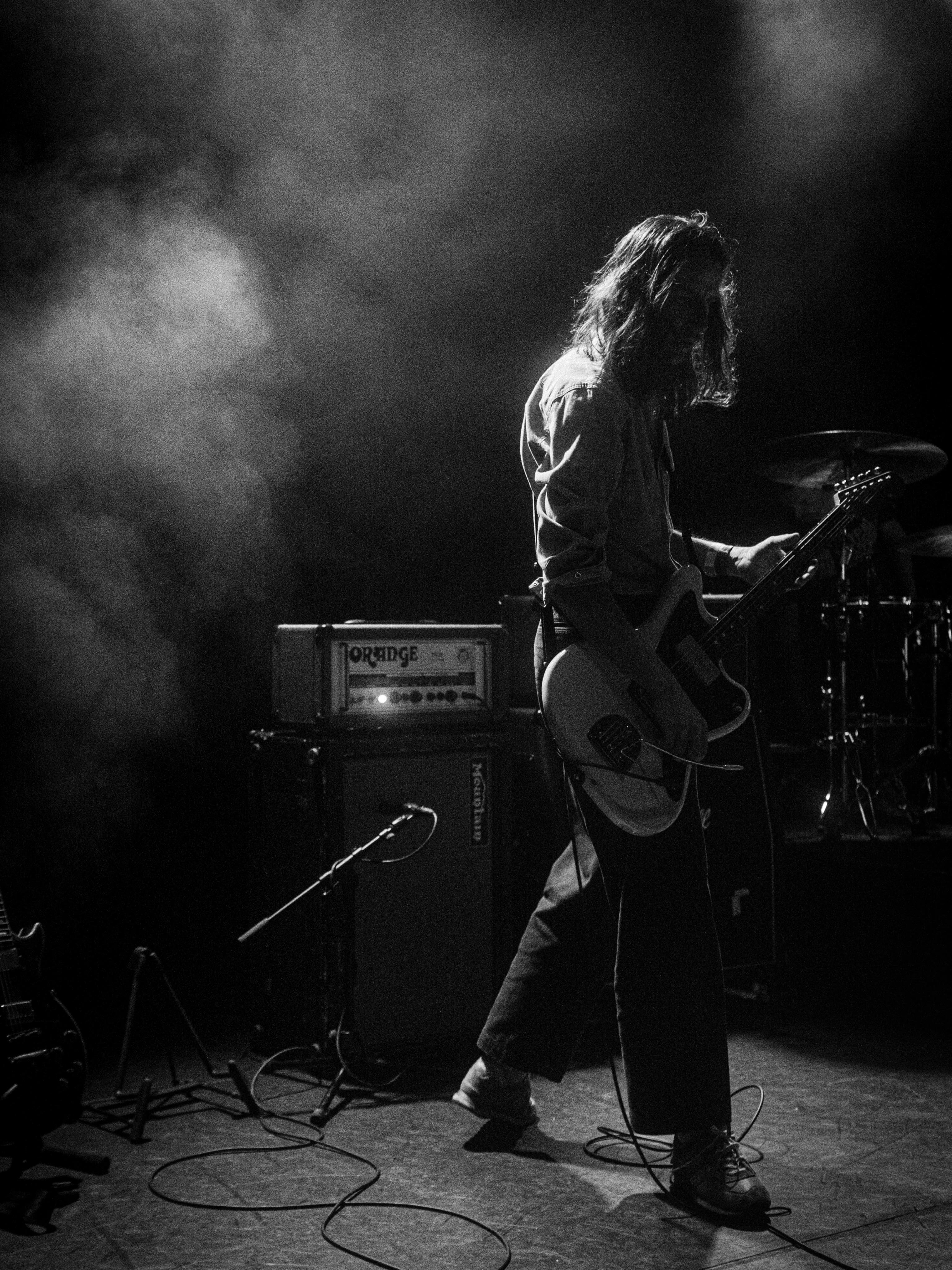 Cedric Goetgebuer live with Wrong Man. Maximum Output Fest, Dordrecht. May 9, 2026. Photo by Giulia Sebastiani.
LF: You’ve touched on the distinctiveness of the sound, which I hadn’t dug into yet, but I think there’s a real case to be made. When I listen back to Rise and Fall, I hear a lot of metal influence in the hardcore—but not in that cutting, modern way that developed into metalcore.
CG: Interesting, yeah. There were plenty of other bands tapping into that same thing around the same time, or a bit later, as we were playing. I remember especially by the time of Our Circle Is Vicious and the last record, that heavy, dirty, Tragedy-influenced hardcore was gaining more traction—some death metal too, with bands leaning into that HM-2 sound. I do remember wondering at the time where we sat in all of that, because I already knew we didn’t want to turn into a metal band. That’s part of why we ended up sounding the way we did, especially on Faith. I’ve gone back and listened to that record a lot recently, actually, with the reunion announcement, and I’m still a bit puzzled at how it turned out the way it did. It’s definitely heavy and dirty, and it clearly comes from that place, but we were actively trying not to sound metal, and I think we found something in that gap. After Into Oblivion especially, there was a real wave of bands moving toward that sound, in Belgium too—that heavier, blackened hardcore became a bit of a thing. I don’t want to claim credit for that, far from it, but I think we were early into that particular sound, and got to do our own version of it before it spread elsewhere.
V.
LF: Let me move into songwriting: I’m a fan of the variety of projects you have been a part of. Personally, I don’t think in frameworks when I write. It’s something that just happens. I’ve read that you like to write with parameters in mind. Do you find that limiting sometimes?
CG: It’s certainly not limiting to me. Doing Wrong Man made me realize how important it is to have focus on what a band should sound like right from its inception, because once you start, the parameters exist organically anyway: you’ve written songs a certain way, your singer sings a certain way, your drummer drums a certain way, and it all checks out. It’s not a written list of dos and don’ts, but you sometimes realize “oh, that’s a thing we’d never do”. Take a chugging breakdown in Wrong Man, for a stupid example. That would make no sense. It’s more about having a clear artistic vision. For Wrong Man that vision was mainly rooted in Rollins Band and Laughing Hyenas—a rocking sound but with primal energy, and a very forceful vocal.
My experience is that you end up with interesting results precisely because you’ve limited yourself. Even in Rise and Fall, a hardcore band with fast parts and mosh parts, the songs I loved most were the ones that pushed outside those lines—a song like “Breathe” on Faith, for instance. You can push the boundaries surprisingly far before it starts sounding alienating. There’s a lot of room to work with. It’s just a matter of being creative within a more confined space. It’s more about killing your idols, not falling into the same riffs, experimenting instead of always basing a song on the same guitar-riff starting point. That said, with Wrong Man we often start by jamming. I hardly write any stuff at home because that way I tend to reach for the things I already know how to do.
That is part of why I stopped bringing fully written songs to practice early on. They never sounded the way I’d imagined once the band got hold of them, so I gave up on that approach. With Rise and Fall, over the years and records, it varied. Some days were incredibly productive, some were a horror show. A lot of it also comes down to practicalities. I’m fortunate that with Wrong Man, like with Rise and Fall before it, we live in the same city, we have a rehearsal space, we meet up virtually every week. Having a bass player and a drummer you can jam with intuitively, where you feel each other—that’s something I always wanted, and it’s a privileged position to be in. It’s also what makes Wrong Man so much fun: the framework is big enough that we can experiment with a lot inside it.
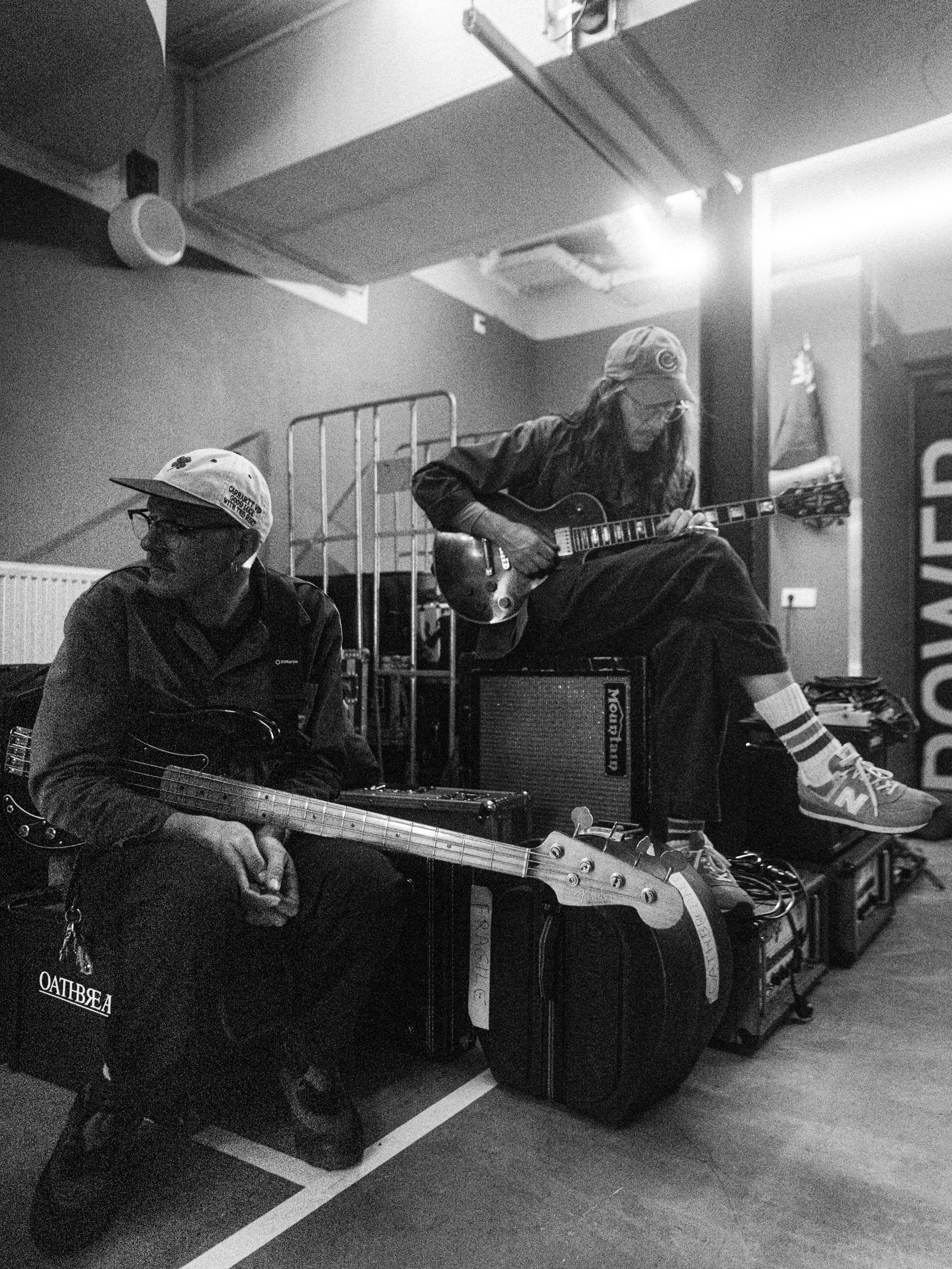 Cedric Goetgebuer and Thijs Goethals of Wrong Man. Maximum Output Fest, Dordrecht. May 9, 2026. Photo by Giulia Sebastiani.
VI.
LF: You’ve said the scene isn’t exclusively a youth thing anymore, that it’s become intergenerational. If something is being transmitted to a younger generation now, is it the same thing you were transmitting when you were in Rise and Fall?
CG: I honestly don’t know what we were transmitting with Rise and Fall. You have a vision, you do the thing, and I didn’t think about it that consciously at the time—hearing people talk about how they felt it still surprises me to this day. What I do notice, and it’s maybe a bit pessimistic, is that we’re in a unique period right now: at bigger shows in Belgium you’ll see people from every era of hardcore over the last twenty, thirty years, all in the same room. People who’d disappeared have come back, which is great, but it also feels like a specific moment – part of why the timing felt right for the Rise and Fall reunion. What happens after that moment, once that generation gets old, I genuinely wonder about. In the US it still feels different—a lot of young people, properly intergenerational. Here in Belgium, a thirty-one-year-old still reads as young at a show. So I do wonder whether it dies out once we do, or how it lives on. The cool part is that the artifacts remain. The records will be there, and even books are being written about it now—it’s being documented, which matters. But where the thing itself lives on, I don’t know.
LF: I do see more young people at shows now, certainly more than four or five years ago. Back then you had to invest real effort to find hardcore. Does that still apply, or do we need to open the doors wider?
CG: I think it’s more accessible now than it’s ever been, and not just accessible, but welcoming too. It’s also very fragmented, which cuts both ways: there’s something for everyone, but that also means you can dip into everything without committing to anything. I think hardcore will always exist in some form, with certain bands going up and down in popularity globally, but locally it depends a lot on whether the right places exist. A scene can only thrive with the right room and something actually happening in it. In Brussels, for instance, the band Instructor puts on shows at this one bar that’s genuinely awful in the best possible way. Everyone loves it precisely because it’s real, an old-school bar in the rough part of town that somehow has amazing shows. That’s what makes a scene feel real. It’s a place people actually go to. Whether that translates to a younger generation, I don’t know, but I think more people now recognize what those places are worth. Back in the day we had a venue that felt the same kind of special. It feels a bit different now, but there’s no way of predicting it.
LF: There is something almost countercultural about the local-scene approach right now, precisely because everything else is global by default - most bands sing in English, are built to travel, even niche scenes are global in reach the moment they exist. Maybe the antithesis is a genuinely local scene, with local bands, developing their own culture within the culture.
CG: And you can feel that in certain cities already. There are smaller pockets with small labels, a lot of bands, sometimes more young people than old. It’s happening. The question is just whether it continues. It can show up in unexpected places, too. The UK, for instance, always felt like something was slightly off about the scene there, and then around 2010 it exploded. Bands were feeding off each other and genuinely excelling. Those things can still happen. I know some of the ingredients, but ultimately it just pops up somewhere, like a mushroom.
LF: I trust it does. This has been beautiful. Thank you for doing this.
CG: Thank you for having me. I had a lot of fun thinking and talking through all of this.